
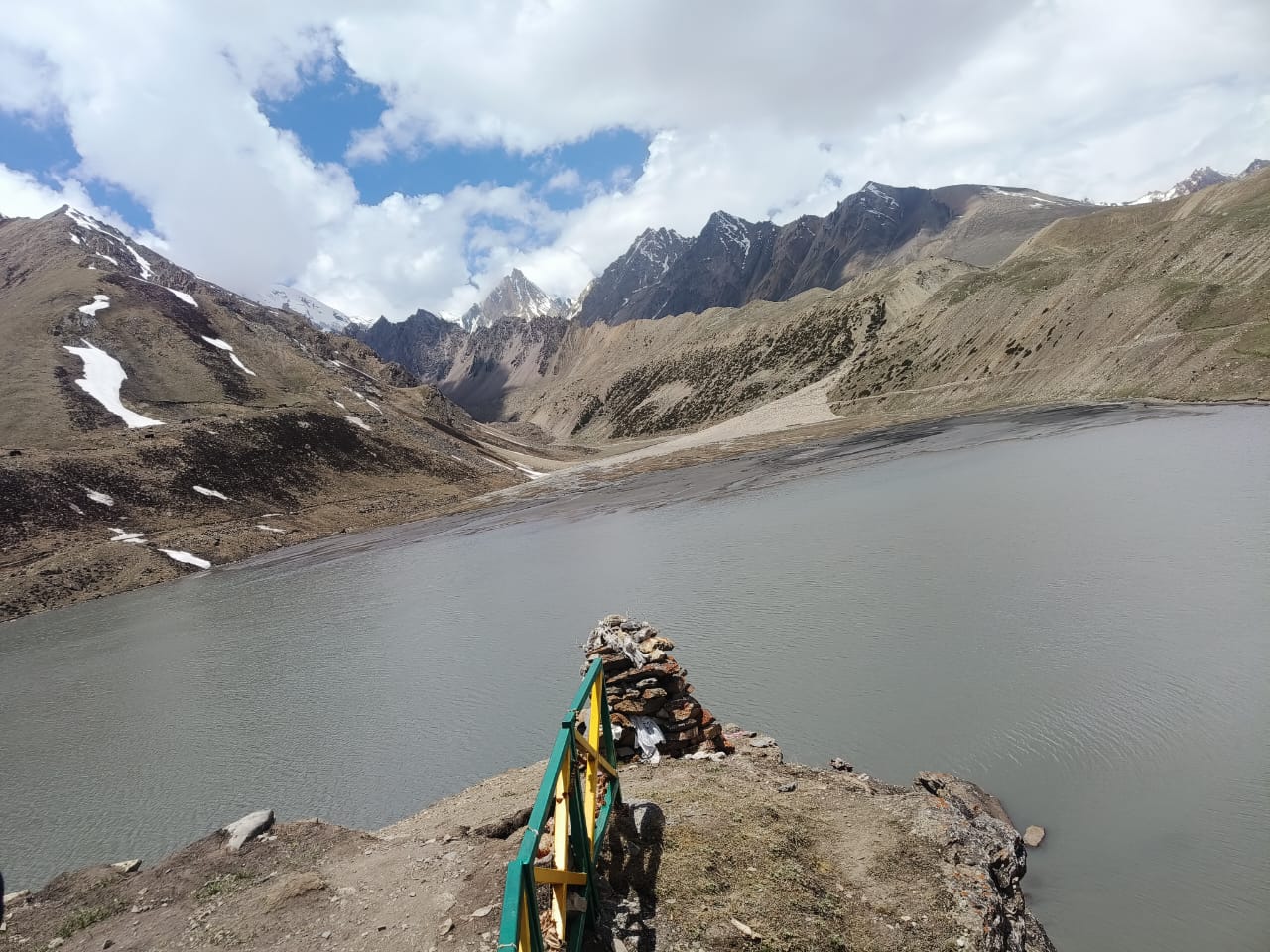
The Adi Kailash Om Parvat Yatra in Uttarakhand is a sacred Himalayan pilgrimage that takes travelers to the divine peaks of Adi Kailash (Chhota Kailash) and the mystical Om Parvat near the India–Tibet border in Pithoragarh district. The journey begins from Dharchula and passes through remote Himalayan villages like Gunji and Kuti, offering breathtaking views of high mountains, river valleys, and spiritual landmarks such as Parvati Sarovar at Jolingkong. Known for its deep spiritual significance and scenic Himalayan landscapes, the Adi Kailash Om Parvat Yatra combines devotion, adventure, and natural beauty, making it one of the most unique pilgrimage journeys in the Kumaon region of Uttarakhand.
Adi Kailash Om Parvat Yatra
Hidden deep in the Kumaon Himalayas of Uttarakhand, the Adi Kailash Om Parvat Yatra is one of India’s most sacred Himalayan pilgrimages. Known as Chhota Kailash, Adi Kailash is believed to be the earthly counterpart of the legendary Mount Kailash in Tibet, the divine abode of Lord Shiva.
This spiritual journey takes pilgrims through the remote valleys of Dharchula, Gunji, Kuti, and Jolingkong, where breathtaking Himalayan landscapes meet centuries-old faith and devotion. Along the way, travelers witness three of the most spiritually significant Himalayan landmarks — Adi Kailash, Om Parvat, and the sacred Lipulekh Pass, from where a distant glimpse of Mount Kailash is sometimes possible.
Unlike the traditional Kailash Mansarovar Yatra, which requires travel through Tibet, the Adi Kailash Yatra can be completed entirely within India, making it an accessible yet deeply meaningful pilgrimage for devotees and adventure seekers alike.
Yatra Overview
The Adi Kailash Om Parvat Yatra in Uttarakhand is a unique blend of pilgrimage and Himalayan exploration. The journey begins from Dharchula in Pithoragarh district and gradually ascends into the high-altitude valleys near the India–Tibet border.
The main highlights of the yatra include:
- Adi Kailash Darshan at Jolingkong
- Parvati Sarovar (Parvati Lake)
- Om Parvat viewing at Nabhidang
- Sacred frontier of Lipulekh Pass
These sacred locations lie within the remote Kuti Valley and Darma Valley regions, surrounded by towering Himalayan peaks and pristine alpine landscapes.
Quick Facts – Adi Kailash Om Parvat Yatra
- Location: Pithoragarh District, Uttarakhand
- Starting Point: Dharchula
- Altitude of Adi Kailash: 5,944 meters (19,500 ft)
- Altitude of Om Parvat: 5,590 meters (18,400 ft)
- Best Time: May–June and September–October
- Yatra Duration: 5–6 days
Adi Kailash: Darshan from Jolingkong and Parvati Lake
At an altitude of about 19,500 feet, Adi Kailash Parvat rises majestically above the serene Parvati Sarovar (Parvati Lake) near Jolingkong.
Pilgrims visiting this sacred site often perform Parikrama around Parvati Lake, offering prayers to Lord Shiva and Goddess Parvati. The reflection of the sacred peak in the calm waters of the lake is considered a powerful spiritual symbol of divine unity.
A small Parvati Temple near the lake provides a peaceful place for prayer, where the silence of the Himalayas deepens the spiritual atmosphere.
Key Details
Adi Kailash Height: ~19,500 ft (5,944 m)
Best Viewing Point: Jolingkong & Parvati Lake
Nearest Village: Kuti
Trek Distance: approx. 14–18 km from the motorable road
The route passes through traditional Himalayan villages, alpine meadows, and dramatic mountain valleys, making the yatra both a spiritual and scenic experience.
Om Parvat: The Divine Symbol of Om
If Adi Kailash represents divine presence, Om Parvat represents divine sound.
Located near Nabhidang, Om Parvat is famous for the naturally formed ‘ॐ’ symbol visible on its snow-covered face. The sacred symbol appears when snow settles on the mountain in a unique pattern against the dark rock surface.
One of the most remarkable aspects of Om Parvat Darshan is that the symbol can be seen directly from the roadside viewpoint at Nabhidang, without any trekking required.
Key Details
Om Parvat Height: ~18,400 ft (5,590 m)
Viewing Point: Nabhidang
Distance from Gunji: approx. 22 km
Trek Required: No
For many pilgrims, the first glimpse of Om Parvat feels deeply emotional — as if the Himalayas themselves are chanting the sacred sound of creation.
Lipulekh Pass: A Rare Glimpse of Mount Kailash
Beyond Om Parvat lies Lipulekh Pass, one of the most historically important Himalayan passes connecting India, Tibet, and Nepal.
Located at around 17,500 feet, this high mountain pass serves as the traditional route for the Kailash Mansarovar Yatra.
On exceptionally clear days, pilgrims may get a distant glimpse of Mount Kailash from this region. However, visiting Lipulekh Pass requires special permission from the Indo-Tibetan Border Police (ITBP) as it lies in a sensitive international border zone.
Lipulekh Pass Details
Altitude: approx. 17,500 ft
Region: India–Tibet–Nepal tri-junction
Distance to Kailash Mansarovar: approx. 94 km
Permit: Mandatory (ITBP & local administration)
Adi Kailash Om Parvat Yatra Route
The Adi Kailash Yatra route from Delhi passes through several scenic Himalayan towns before reaching Dharchula.
Road Route
Delhi → Haldwani → Pithoragarh → Dharchula → Gunji → Kuti → Jolingkong
Distance Overview
Delhi to Dharchula: approx. 650 km
Dharchula to jolingkong: approx. 100 km
Adi Kailash to Om Parvat: approx. 30 km
The road network in this region is maintained by the Border Roads Organisation (BRO), connecting remote valleys close to the international border.
Adi Kailash Om Parvat Yatra Itinerary
The Adi Kailash Om Parvat Yatra itinerary typically takes 5–6 days, depending on road conditions, permits, and weather. The journey gradually ascends from the Kumaon foothills into the high Himalayan valleys near the India–Tibet border.
- Day 1- Arrival In Pithoragarh/Dharchula
- Day 2- Pithoragarh/Dharchula To Gunji Drive
- Day 3- Gunji To Nabidang And Back To Gunji Drive
- Day 4- Gunji To Parvati Sarovar And Back Drive
- Day 5- Drive Back To Pithoragarh/Dharchula
Adi Kailash Om Parvat Yatra Packages and Cost
The Adi Kailash Om Parvat Yatra packages are usually designed as 5–6 day journeys covering all major pilgrimage sites.
Typical packages include:
- Transportation from Dharchula
- Accommodation in guesthouses or camps
- Meals during the yatra
- Local guide support
- Inner line permits and administrative clearances
Some operators also offer helicopter-assisted options, depending on seasonal permissions and operational conditions.
Permits and Travel Regulations
Since the region lies near the India–Tibet border, travelers must obtain Inner Line Permits before starting the yatra.
Permits are issued by the SDM office in Dharchula, and additional permissions may be required from the ITBP and local administration.
Required documents generally include:
- Government ID proof
- Passport-size photographs
- Medical fitness certificate
Best Time to Visit Adi Kailash Om Parvat
The best time for the Adi Kailash Om Parvat Yatra is during the summer and post-monsoon seasons when roads remain open and weather conditions are stable.
Recommended Months
May – June
September – October
During these months the valleys bloom with alpine flowers, and the Himalayan peaks remain clearly visible.
Weather Conditions
Day Temperature: 5°C to 15°C
Night Temperature: -5°C to 5°C
Weather in the high Himalayas can change quickly, so warm clothing is essential.
Spiritual Significance of Adi Kailash
According to ancient Hindu traditions, Adi Kailash is believed to be the earthly reflection of Mount Kailash, the cosmic center of Lord Shiva’s divine energy.
Pilgrims believe that offering prayers at Parvati Sarovar and Adi Kailash brings spiritual purification and blessings from Lord Shiva and Goddess Parvati.
For many devotees, completing the Adi Kailash Om Parvat Yatra carries spiritual significance similar to visiting Kailash Mansarovar itself.
Himalayan Border Landscape and High-Altitude Environment
The journey through the eastern Kumaon Himalayas passes close to the India–Tibet border, where the terrain becomes more rugged and dramatic. The landscape changes from forested valleys near Dharchula to high-altitude alpine terrain with rocky slopes, glacial streams, and vast open valleys. These remote regions are part of a sensitive Himalayan frontier protected by the Indo-Tibetan Border Police (ITBP), and the roads are maintained by the Border Roads Organisation (BRO).
Culture and Lifestyle of the Bhotiya Community
The remote valleys near the border are home to the Bhotiya community, a Himalayan tribe with a long history of trans-Himalayan trade. Traditionally, they travelled across mountain passes to Tibet, exchanging wool, salt, and local goods. Even today, villages such as Gunji, Kuti, and Nabi preserve elements of this heritage through stone houses, traditional clothing, and seasonal migration patterns. Their culture reflects a deep connection with the mountains and the rhythms of life in high-altitude regions.
Flora and Fauna of the Kumaon Border Valleys
The high Himalayan valleys in this region support a variety of alpine plants and wildlife. Lower elevations feature forests of pine, oak, and rhododendron, while higher areas transition into alpine meadows filled with seasonal wildflowers. Wildlife occasionally seen in these valleys includes Himalayan monal, musk deer, Himalayan tahr, and blue sheep, along with many species of mountain birds.
High-Altitude Travel Tips
Travel in the Himalayan border regions requires preparation due to altitude and changing weather conditions. Visitors should acclimatize properly, carry warm clothing, and stay hydrated during the journey. Weather can change quickly in the mountains, so it is important to plan travel carefully and follow local guidance and permit regulations.
Experience of Traveling Through Remote Himalayan Villages
One of the most memorable aspects of the journey is passing through small mountain settlements where life moves at a slower pace. Stone houses, terraced fields, and traditional prayer flags create a unique Himalayan atmosphere. Travelers often find these villages to be places of quiet reflection, where the natural beauty of the mountains and the simplicity of local life leave a lasting impression.
Final Thoughts
The Adi Kailash Om Parvat Yatra is more than a pilgrimage — it is a profound spiritual journey through one of the most sacred landscapes of the Himalayas.
Standing before Adi Kailash, witnessing the mystical symbol on Om Parvat, and walking along the ancient Himalayan frontier near Lipulekh Pass creates a once-in-a-lifetime experience of devotion, nature, and inner peace.
For pilgrims and travelers alike, this journey offers a rare opportunity to connect with both the divinity of Lord Shiva and the timeless silence of the Himalayas.
Adi Kailash Om Parvat Yatra Highlights
- Visit Adi Kailash (Chhota Kailash), considered the sacred reflection of Mount Kailash in Tibet.
- Witness the mystical ‘ॐ’ symbol naturally formed on Om Parvat near Nabhidang.
- Experience Parvati Sarovar (Parvati Lake) at Jolingkong, where pilgrims perform prayers and parikrama.
- Travel through the remote Himalayan valleys of Dharchula, Gunji, and Kuti near the India–Tibet border.
- Opportunity to see Mount Kailash from Lipulekh Pass on clear days with special permission.
- One of the most spiritually significant Himalayan pilgrimages in Uttarakhand.
- Journey through dramatic landscapes of high mountains, alpine valleys, and sacred rivers.
- A unique pilgrimage that combines spiritual devotion and Himalayan adventure.